
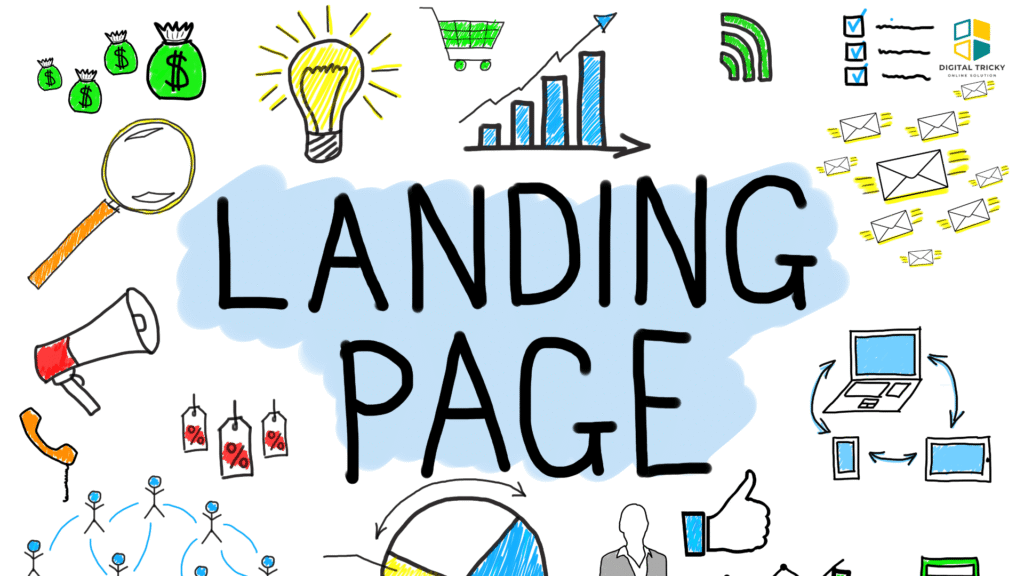
what is landing page?

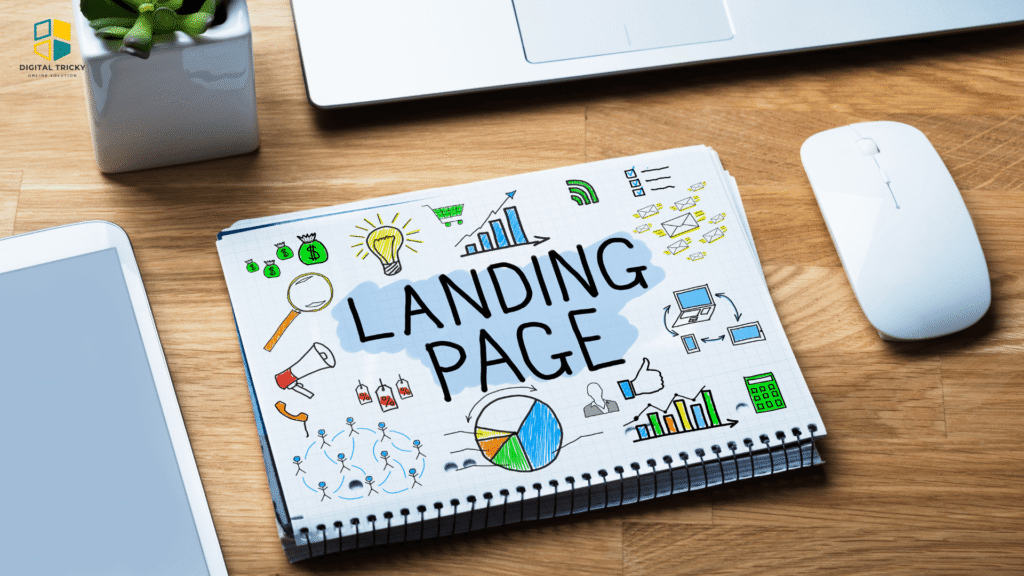
What Is a Landing Page? A Simple Guide to Turn Visitors into Customers for Beginners

Introduction

What is Landing Page? have you try to find answer for it?

If no, in this article you will find better result for it.

Have you ever clicked on an ad, a link, or a button—and landed on a page that tells you exactly what to do next?

No distractions.
No confusion.
Just one clear message and one clear action.

That page is called a landing page.

But what exactly is a landing page?
Why do marketers, business owners, and advertisers talk about it so much?
And how can just one single page help you get more leads, more sales, or more sign-ups?

Here’s the interesting part
A landing page is not like a normal website page.

It has one goal, one message, and one action.

In this article, you’ll clearly understand:

  • What a landing page is
  • How it works
  • Why it is so powerful
  • And how you can use it to grow your business or brand—even if you’re a complete beginner

Let’s start from the basics and break it down in the simplest way possible.

What Is a Landing Page?

A landing page is a standalone webpage designed to direct visitors to take one specific action.

When you visit a normal website, you usually see:

  • Navigation menus (Home, About Us, Contact Us)
  • Multiple links
  • Many sections and pages

If you scroll down, you’ll find even more options.

A website gives visitors a lot of information.

But a landing page does something very different.

How a Landing Page Works?

A landing page is created to make users do one thing only:

  • Sign up
  • Download
  • Register
  • Book
  • Buy

Nothing else.

Because of this strong focus, landing pages usually have higher conversion rates.

Just imagine this:

  • 100 people visit your landing page
  • At least 30 of them become quality leads

That’s the power of a landing page.

Before that you have to build your customer persona, if you want to know more about it then click here.

how landing page works?

Why Landing Pages Are So Powerful?

Landing pages are mainly used for performance marketing activities, such as:

  • Paid Ads
  • Email Marketing
  • Campaign-based promotions

Whether it’s a lead page or a sales page, the goal is the same—to get results.

Since you are already paying for traffic (ads, tools, or platforms), it makes sense to send people to a page that is optimized to convert.
why landing page are so powerful?

Common Actions on a Landing Page

  • E-book download
  • Webinar registration
  • Booking an appointment
  • Buying a product
  • Booking a free demo

There are only two outcomes:

  1. Visitors become leads or customers
  2. Visitors leave the page

That’s it—no middle ground.

What is the Difference Between a Website and a Landing Page?

Most people don’t clearly understand the difference between a website and a landing page.

Website

A website is like a digital brochure.

  • Multiple pages
  • Multiple links
  • Multiple objectives

Landing Page

A landing page is distraction-free.

  • No unnecessary links
  • No navigation menu
  • One clear objective

The entire page is focused on getting users to take one specific action.

Landing Page vs Website (Comparison Table)

Landing Page

  • Single-focused objective
  • No navigation options
  • Designed for a specific campaign
  • Clear Call to Action (CTA)
  • Tailored for a specific audience
  • Optimized for conversions

Website

  • Multiple objectives or purposes
  • Extensive navigation options
  • Part of the overall website structure
  • Various CTAs or no specific CTA
  • Targeted toward a broader audience
  • Focused on information and engagement
What is the Difference Between a Website and a Landing Page?

What are the different types of Landing Pages?

Understanding different types of landing pages helps you choose the right structure for your goal.

Lead Generation Landing Pages (Opt-in / Squeeze Pages)

These pages are designed to capture contact information from visitors.

Usually, something valuable is offered in exchange, such as:

  • E-books
  • Whitepapers
  • Newsletters
  • Product or service enquiries

E-book or Whitepaper Landing Pages

These pages offer downloadable resources like e-books, whitepapers, or reports in exchange for user details.

Webinar Registration Pages

Used to promote webinars and collect registrations by highlighting the benefits of attending.

Newsletter Signup Pages

Designed to collect emails for regular updates.

Subscribers receive ongoing value, helping you nurture and build trust with your audience.

Contest or Giveaway Pages

These pages offer prizes in exchange for participation or contact details, creating excitement and engagement.

Free Trial or Demo Pages

Common in SaaS industries, these pages offer free trials or demos in exchange for user information.

Assessment or Quiz Pages

Interactive pages that provide personalized insights while collecting user data for lead nurturing.

Application Pages

Used for job applications, scholarship programs, event registrations, or any selection-based process.

Product or Service Enquiry Pages

These pages help visitors who are interested but still have questions.

The goal is to connect potential customers with the sales team for more personalized communication.
What are the different types of Landing Pages?

What Is a Sales Page?

Sales pages are designed to sell products or services directly.

They provide detailed information, highlight benefits, and use persuasive elements to encourage conversions.

Product Pages

Dedicated pages that showcase a product’s features, benefits, testimonials, and pricing.

Service Pages

Similar to product pages but focused on services, outlining benefits and pricing details.

Upsell or Cross-sell Pages

These pages increase the value of a purchase by offering upgrades or related products during checkout.

Limited-Time Offer Pages

Designed to create urgency by promoting special discounts or time-sensitive offers.

Pre-Order Pages

Used for upcoming product launches to build anticipation and secure early sales.

Membership or Subscription Pages

Focused on attracting subscribers with ongoing services, often featuring tiered pricing and benefits.

What Is a Sales Page?

Why Is a Thank You Page Important?

After visitors complete an action—such as submitting a form or making a purchase—they are redirected to a Thank You page.

This page:

  • Confirms the action
  • Builds trust
  • Provides next steps or instructions
  • Can suggest additional offers or content

A Thank You page completes the user journey and improves the overall experience.

What is the importance of thank you page?

Conclusion

A landing page is not just another webpage—it’s a conversion tool.

Unlike a website that informs and educates, a landing page is designed to drive action.
One page.
One message.
One goal.

Whether you want more leads, more sales, or more sign-ups, a well-designed landing page can make a huge difference—especially when you’re running ads or campaigns.

If you focus on clarity, remove distractions, and guide users toward one clear action, your landing page can become one of the most powerful assets for growing your business or personal brand.

And now that you understand the basics, the next step is simple:
Create a landing page with a clear goal—and let it work for you.

If you want to follow me on Instagram clickhere.
What is Law of Marketing?

What Are the Laws of Marketing? A Complete Guide for Beginners

Introduction:

What Are the Laws of Marketing? In this article you understand what exactly the Laws of Marketing and you will dig more inside in this topic via this article.

Marketing is based on science, not just creativity.

Many people believe that marketing is all about creative advertisements, catchy slogans, and visually appealing products. While creativity plays a role, the reality is that marketing is deeply rooted in science.

What Are the Laws of Marketing?

Marketing Begins Before the Product Exists

Marketing does not start after a product or service is created—it begins before that.

Most people assume marketing is simply about promoting products that already exist. In truth, marketing starts with understanding customers and their needs, and then developing products or services that solve real problems.

If you want to know How to Identify Target Customer Persona and Understand them, then you Click Here, You will get detailed information on it.

When a product is built around genuine customer needs, it begins to sell itself.

What Are the Laws of Marketing?

Understanding Customers Is the Core of Marketing

Through the marketing process, you gain deep insights into your customers—their pain points, desires, and unmet needs. This allows you to create better solutions and even discover opportunities for additional products or services.

If you develop a product based on customer needs, heavy selling becomes unnecessary because the product naturally creates demand.

Marketing Is About the Right Message, Person, and Timing

At its core, marketing means sending the right message to the right person at the right time.

When done correctly, the customer feels like the message is speaking directly to them. Timing is just as important as targeting and messaging—this precision is why marketing is a science.

What Are the Laws of Marketing?

Marketing Is Not Just Selling

Marketing is not limited to closing a sale. It also involves keeping existing customers happy by consistently communicating with them so they remain loyal for life.

Many people stop marketing once a transaction happens. This is a mistake.

Marketing exists:

  • Before the product is created
  • While the product is being sold
  • After the purchase, to encourage repeat business and loyalty

This is why building a marketing funnel is essential.

What Are the Laws of Marketing?

Trust Is the Foundation of Marketing

Today, trust plays a critical role in marketing. People do not easily trust strangers.

As a marketer, your number one responsibility is to build trust with your target audience. Marketing is essentially the art of building trust with many people at the same time.

You naturally trust people you grow up with—family and friends. Marketing helps build that same sense of trust with strangers through strong branding and consistent communication.

Marketing Builds Brand Positioning

The primary goal of marketing is to build a brand and occupy a position in the customer’s mind.

A perfect example is Google.

Google does not aggressively market itself as a search engine, yet when people think of searching the internet, Google instantly comes to mind. Once a brand achieves this level of positioning, the need for continuous marketing decreases.

When your brand becomes strong, word-of-mouth becomes your most powerful marketing asset.

Marketing Eventually Becomes Optional

Until you reach strong brand recognition, marketing is necessary. Once you achieve it, marketing becomes optional rather than mandatory.

As Peter Drucker famously said:

“The aim of marketing is to know and understand the customer so well that the product or service fits them and sells itself. The aim of marketing is to make selling superfluous.”

Marketing vs. Product Reality

Marketing is a game of perception, while products and services are rooted in reality.

Marketing is difficult to master, and when used unethically, it can sell low-quality products. However, good marketing combined with a high-quality product creates sustainable success.

Never give more importance to marketing than to the product or service itself.

What Are the Laws of Marketing?

Quality Determines Long-Term Success

If your product or service is poor, marketing will not save your business—it will only accelerate its failure.

Marketing may attract customers once, but product quality determines whether they stay and refer others.

A great product turns customers into brand ambassadors, and word-of-mouth becomes the most powerful marketing channel.

Marketing Is a System, Not a Single Activity

Advertising, copywriting, and sales are all components of marketing, not marketing itself.

Companies like Nike are often described as marketing companies—but even they rely on strong products supported by powerful perception.

Marketing helps people discover a product and shapes how they perceive it, as seen with brands like Apple.

Final Thought

Always prioritize product quality first. Marketing is the spark that ignites growth, but quality is what sustains it.

Master marketing, build trust, create exceptional products, and everything else will fall into place.

If you want to Follow my Instagram for More relevant Content, please Click Here

Thank you,regards

Prashantkumar B Bhajantri

Frequently Asked Questions

What are the marketing laws?

Marketing does not start after a product or service is created—it begins before that.

Most people assume marketing is simply about promoting products that already exist. In truth, marketing starts with understanding customers and their needs, and then developing products or services that solve real problems.

When a product is built around genuine customer needs, it begins to sell itself.

What is the difference betweeen Marketing vs Product Reality?

Marketing is a game of perception, while products and services are rooted in reality.

Marketing is difficult to master, and when used unethically, it can sell low-quality products. However, good marketing combined with a high-quality product creates sustainable success.

Never give more importance to marketing than to the product or service itself.

How Marketing Builds Brand Positioning?

The primary goal of marketing is to build a brand and occupy a position in the customer’s mind.

A perfect example is Google.

Google does not aggressively market itself as a search engine, yet when people think of searching the internet, Google instantly comes to mind. Once a brand achieves this level of positioning, the need for continuous marketing decreases.

When your brand becomes strong, word-of-mouth becomes your most powerful marketing asset.

What is Search Engine Optimization?

SEO for Beginners: How to Rank Websites the Right Way

Introduction:

SEO for Beginners: How to Rank Websites the Right Way.

What is the first step in Search Engine Optimization?

If you ask me this question, my answer is simple: first understand what Search Engine Optimization actually means, and only then move on to the different steps.

Today, many people mention “SEO Specialist” or similar titles in their profiles. But the reality is very different.

Most of them do not understand the proper way to optimize a website or articles. Their primary goal is often just to bring traffic to a website—without focusing on quality or user intent.

In this article, I don’t tell you types and all, but I will give you basic but solid information about Search Engine Optimization.

What Is Search Engine Optimization?

Search Engine Optimization (SEO) is the process of optimizing your website to improve relevance and increase authority by solving user queries.

The most important part of this definition is “solving user queries.”

SEO is not just about optimizing your website for search engines.
It is about solving real user problems through valuable content.

If you want to know how to create an Valuable content then click here, you will get deep knowledge about the content marketing.

My mentor Sanjay Shenoy says:

“SEO is NOT a knowledge problem. It’s an execution problem.”

I completely agree with this.

If you only learn SEO but do not implement it, you will never see results.

Most people consume SEO tips and tricks, implement them quickly, and sometimes even get short-term results. But those results don’t last.

One Google update can push your website to the second page of Google.

And as the famous quote says:

“You can hide a dead body on the second page of Google.”

Very few people visit the second page. That’s why your SEO foundation must be strong.

What is Search Engine Optimization?

How Search Engines Work?

Before learning how to do SEO, you must understand how search engines work.

Search engines work in three simple steps:

1. Crawling

Google crawlers (or bots) scan the World Wide Web to discover websites and content.

They collect:

  • New content
  • Updated content
  • Existing pages

And store this information in Google’s system.

2. Indexing

Once the content is crawled, Google tries to understand:

  • What the content is about
  • Which topic it belongs to
  • The context and meaning

After understanding this, Google organizes the content in its index.

3. Ranking

Finally, based on:

  • Relevance
  • Authority
  • User behavior
  • And more than 200 ranking signals

Google decides where your website should appear in search results. Remember you should always create an content which is more relavent and problem solving content for the readers. so create an quality content.

How Search Engine Works?

Important SEO Factors

Although Google has over 200 ranking signals, they can broadly be grouped into three core factors:

  1. Relevance – How closely your content matches the user query
  2. Authority – How trustworthy and credible your website is
  3. User Signals – How users behave on your website

All ranking signals fall under these three categories.

How to Check User Behavior on Your Website?

Google Analytics

Google Analytics helps you understand:

  • Where traffic comes from
  • How users interact with your site
  • Time spent, bounce rate, and more

Google Search Console

Google Search Console shows:

  • Organic search performance
  • Keywords you rank for
  • Clicks, impressions, and indexing issues

Both are official Google tools, so you can trust the data completely.

How to Check User Behavior on Your Website?

What Is a Keyword?

A keyword is simply a user query—the word or phrase a user types into a search engine.

Keyword research is the first practical step in any SEO project.

What Is a Keyword?

Types of Keywords

There are three main types of keywords:

1. One-word keywords

Example: SEO

  • Very high competition
  • Very high search volume

2. Two to three-word phrases

Examples:

  • SEO tools
  • SEO online tools

These have:

  • Medium competition
  • Decent search volume

3. Four or more-word phrases (Long-tail keywords)

Example: Most popular SEO tools online

These have:

  • Very low competition
  • Low search volume
  • Very high user intent

Example search volumes:

  • SEO – 13.4K
  • SEO tools – 3K
  • Most popular SEO tools online – 10

Even though the volume is low, user intent is strongest in long-tail keywords.

Search Commercial Intent Funnel

This funnel represents the user’s search journey.

Top of the Funnel – Informational & Navigational

  • 80–90% of total searches
  • Low competition
  • Users want information

Middle of the Funnel – Research & Discovery

  • Medium volume
  • Medium competition
  • Users compare tools or services

Bottom of the Funnel – Purchase / Transactional

  • Low volume
  • Very high competition
  • Users are ready to buy
Search Commercial Intent Funnel

Which Keywords Should You Target First?

If you are starting a blog from scratch, do NOT target transactional keywords first.

Why?

  • Big websites already dominate them
  • They have strong authority
  • New websites rarely rank for them
  1. Start with informational keywords
  2. Build traffic and authority
  3. Move to research & discovery keywords
  4. Finally, target transactional keywords
SEO for Beginners: How to Rank Websites the Right Way

Types of Keywords Explained

Informational Keywords

Users want knowledge.

Examples:

  • What is SEO?
  • Why is SEO important?
  • How does SEO work?

These help build trust and authority.

Research & Discovery Keywords

Users know the problem and look for solutions.

Examples:

  • Best SEO tools
  • Best SEO services

Users compare options and read reviews.

Purchase Keywords

Users are ready to buy.

Examples:

  • Buy SEO services
  • Buy SEO tools

These keywords convert well—but only after authority is built.

Types of Keywords Explained

How to Do Keyword Research

Step 1: List Topic Ideas

Write down all topics related to your niche.

Step 2: Find Seed Keywords

Choose broad keywords with good volume but unclear intent.

Step 3: Choose a Primary Keyword

Select one keyword with:

  • Good volume
  • Low to medium competition

Step 4: Find Secondary & LSI Keywords

LSI (Latent Semantic Indexing) keywords help improve content context and relevance.

Consistency Is the Key

Publishing four articles in one month and staying inactive will not give results.

SEO requires consistent content creation and optimization.

  • Ahrefs (Highly recommended)
  • Ubersuggest
  • Keyword.io

Final Words

This article covers the fundamentals of SEO.

In the future, I will publish more in-depth articles on advanced SEO topics.

If you want to follow me then click here.

Until then,
Take care.

Prashantkumar

Frequently Asked Question

What is search engine optimization?

Search Engine Optimization (SEO) is the process of optimizing your website to improve relevance and increase authority by solving user queries.

How does a search engine really work?

We use a huge set of computers to crawl billions of pages on the web. The program that does the fetching is called Googlebot (also known as a crawler, robot, bot, or spider). Googlebot uses an algorithmic process to determine which sites to crawl, how often, and how many pages to fetch from each site.

What are the important factors of SEO?

Relavency
Authority
User Signals
High Quality Content
User Experiance
Domain Authority

What are the types of Keywords?

Informational Keywords
Research & Discovery Keywords
Purchase Keywords

What is content marketing?

Content Marketing in 2026: A Complete Guide for Beginners, Creators, and Businesses

Introduction

In today’s digital world, content plays a very important role in growing a business.
Whether it is a website, blog, social media, or email, content is everywhere.

Content writing has become one of the most in-demand skills in digital marketing.
But the problem is, many content creators do not think like customers. They write content just to fill pages or rank on Google, without understanding what the reader actually needs.

Good content always focuses on solving problems, not just sharing information.

If you are a content creator, your goal should be simple: Help the reader while they are reading your content. If you want to know how to write content like pro then click here.

Unfortunately, truly skilled content creators are still very few in the market.

In this article, you will learn the complete foundation of content marketing and content writing, explained in a very simple way.

What Is Content Marketing?

Content marketing is the process of creating and sharing valuable, useful, and consistent content to attract and engage a specific audience.

The main goals of content marketing are:

  • Build brand awareness
  • Gain audience trust
  • Educate potential customers
  • Encourage people to take action

Content marketing does not focus only on selling.
Instead, it focuses on:

  • Informing
  • Educating
  • Entertaining
  • Adding value

When people trust your content, they naturally trust your brand.

Content can be in many forms, such as:

  • Blog posts
  • Videos
  • Infographics
  • Social media posts
  • Emails

Content creation and content distribution go hand in hand.
If you ignore either one, your content marketing will not work effectively.

What is content marketing?

What Is Content Writing?

Content writing means creating written material to explain ideas, share information, promote services, or tell stories.

Content can exist in:

  • Online formats (websites, blogs, emails)
  • Offline formats (magazines, books, brochures)

Every piece of content is created for a specific purpose, such as:

  • Educating readers
  • Promoting a product or service
  • Building trust
  • Driving action
What is content writing?

Importance of Content Writing

Content writing is a key part of digital marketing because:

  • It helps businesses connect with customers
  • It provides valuable and trustworthy information
  • It supports SEO and improves search rankings
  • It builds credibility and brand authority
  • It helps generate leads and sales

If you are a skilled content writer, you can also create:

  • Physical books
  • eBooks
  • Courses
  • Guides
Importance of content Writing.

Types of Content Writing

There are many fields in content writing. Some important ones are explained below.

Web Content Writing

Writing content for website pages such as:

  • Home page
  • About page
  • Service pages
  • Contact page
  • FAQs

Academic Writing

Used in colleges and universities for:

  • Research papers
  • Academic articles

Article Writing

Articles written for:

  • Blogs (online)
  • Magazines or newspapers (offline)

Business Writing

Includes professional content like:

  • Proposals
  • Case studies
  • Company documents

Freelance Writing

Independent writing work where you provide content to clients and get paid per project.

Ghostwriting

You write content, but the credit goes to someone else.

Journalism

Writing for newspapers, journals, or news platforms.

Review Writing

Writing reviews for:

  • Movies
  • Products
  • Services

Blogging

Regularly publishing articles on a specific niche.

Technical Writing

Explaining technical topics in a simple and easy way, such as manuals or guides.

Main Types of Content Writing

  • Article writing: Blogs, interviews, guest posts
  • Web content: Website pages, product pages, FAQs
  • Business content: Proposals, brochures, case studies
  • Copywriting: Ads, landing pages, banners
  • eBook writing: Guides, courses
  • Technical writing: Manuals, documentation
  • SEO content writing: Keyword-focused content
  • Social media writing: Captions, posts, scripts
  • Press releases: Business announcements
  • Email writing: Promotional and informational emails

Good content is built on strong fundamentals.

Main types of Content Writing

Fundamentals of Content Writing

Language and Tone

  • Write according to your target audience
  • Use simple and familiar words
  • Be clear, concise, and direct
  • Avoid complex or confusing language

Grammar

Good grammar improves readability and professionalism.

Plagiarism

Avoid copying content from other websites.

Types of plagiarism to avoid:

  • Content scraping (copy-paste)
  • Spun content (rewriting with synonyms)
  • Unintentional plagiarism (similar phrasing)

Always create original content.

Research

Before writing:

  • Understand your audience
  • Research keywords
  • Analyze competitors
  • Use reliable data and statistics

Readability

  • Use short paragraphs
  • Use bullet points
  • Keep sentences simple

What Is a Blog Post?

A blog post is an article published on a website, usually focused on a specific topic or niche.

What is a Blog Post?

Importance of Blog Posts

Blog posts help to:

  • Attract organic traffic
  • Rank for keywords
  • Build brand authority
  • Generate leads
  • Support service pages

Traffic from blogs can be redirected to:

  • Service pages
  • Contact forms
  • Lead magnets

How to Write a Good Blog Post

  1. Choose the right topic
  2. Write a catchy title
  3. Create a clear outline
  4. Write a problem-focused introduction
  5. Use headings and subheadings
  6. Add value with research
  7. Use a strong call to action
  8. Proofread and edit

Types of Blog Posts

  • List posts: Top 10 tools, best tips
  • How-to guides: Step-by-step tutorials
  • Infographics: Visual content
  • Interviews: Industry experts
  • Guest posts: Writing for other blogs
  • Newsjacking: Trending topics
  • Pillar content: Complete guides
  • Personal stories: Brand journey

Content Writing vs Creative Writing

Content Writing

  • Purpose-driven
  • Research-based
  • Informative and persuasive
  • Used for marketing

Examples:

  • Blogs
  • Website content
  • Ads
  • Product descriptions

Creative Writing

  • Emotion-driven
  • Story-based
  • Used for entertainment

Examples:

  • Poems
  • Novels
  • Short stories
  • Scripts

What Is Website Content?

Website content includes all the written information on:

  • Home page
  • About page
  • Service pages

Importance of Website Content

  • Educates visitors
  • Improves SEO
  • Generates leads
  • Builds trust

SEO Content Writing

SEO content writing means creating content that is:

  • Helpful for users
  • Optimized for search engines

Key SEO Practices

  • Keyword research
  • Long-tail keywords
  • SEO-friendly titles
  • Proper headings
  • Natural keyword usage
  • Image optimization
  • Internal and external linking
  • Voice search optimization
  • Consistent publishing

Benefits of Content Marketing

  • Builds brand awareness
  • Improves audience engagement
  • Establishes authority
  • Generates organic leads
  • Improves SEO rankings
  • Cost-effective marketing
  • Helps retain customers

Conclusion

In today’s competitive digital world, content marketing is one of the most powerful tools for business growth.

Content marketing is not about selling aggressively.
It is about:

  • Educating
  • Helping
  • Building trust
  • Inspiring action

When done correctly, content marketing:

  • Builds long-term authority
  • Creates organic leads
  • Strengthens brand presence

In simple words, content marketing is an art of helping people through content.

So, I hope this article will give you depth knowledge about content marketing.

If you want to know more about digital marketing then click here and follow my social media profile.

Frequently Asked Questions

What is content Marketing?

Content marketing is nothing but approaching or distributing values, relavent content like blogs, videos, podcasts to attract and retain specific audience, building trust and relationship and at the end convert them to become customers.

whatn are the 5 C’s of Content Marketing?

5 C’s of content marketing is Clarity, consistency, Creativity, Customer Centricity and Conversion Focused.

What are the 4 P’s of Content Marketing?

Product, Place, Price, Promotions are the 4 P’s of content Marketing.

What are the 5 pillars of Content Marketing?

1. Creating compelling and Valuable Content.
2. Promoting your content through SEO and social media.
3. Creating a Consistent Content and Publishing schedule
4. analyzing you content performance and making improvement.
5. Incorporating content marketing into your overall marketing strategy.

What are the 4 E’s of Content Marketing?

4 E’s stands for Content, Educatem, Engage, Entertains and Empower.