
Table of contents
- Introduction
- How a Landing Page Works ?
- Why Landing Pages Are So Powerful ?
- What is the Difference Between a Website and a Landing Page ?
- What are the different types of Landing Pages?
- Lead Generation Landing Pages (Opt-in / Squeeze Pages)
- E-book or Whitepaper Landing Pages
- Webinar Registration Pages
- Newsletter Signup Pages
- Contest or Giveaway Pages
- Free Trial or Demo Pages
- Assessment or Quiz Pages
- Application Pages
- Product or Service Enquiry Pages
- Product Pages
- Service Pages
- Upsell or Cross-sell Pages
- Limited-Time Offer Pages
- Pre-Order Pages
- Membership or Subscription Pages
Introduction
What is Landing Page? have you try to find answer for it?
If no, in this article you will find better result for it.
Have you ever clicked on an ad, a link, or a button—and landed on a page that tells you exactly what to do next?
No distractions.
No confusion.
Just one clear message and one clear action.
That page is called a landing page.
But what exactly is a landing page?
Why do marketers, business owners, and advertisers talk about it so much?
And how can just one single page help you get more leads, more sales, or more sign-ups?
Here’s the interesting part
A landing page is not like a normal website page.
It has one goal, one message, and one action.
In this article, you’ll clearly understand:
- What a landing page is
- How it works
- Why it is so powerful
- And how you can use it to grow your business or brand—even if you’re a complete beginner
Let’s start from the basics and break it down in the simplest way possible.
What Is a Landing Page?
A landing page is a standalone webpage designed to direct visitors to take one specific action.
When you visit a normal website, you usually see:
- Navigation menus (Home, About Us, Contact Us)
- Multiple links
- Many sections and pages
If you scroll down, you’ll find even more options.
A website gives visitors a lot of information.
But a landing page does something very different.
How a Landing Page Works?
A landing page is created to make users do one thing only:
- Sign up
- Download
- Register
- Book
- Buy
Nothing else.
Because of this strong focus, landing pages usually have higher conversion rates.
Just imagine this:
- 100 people visit your landing page
- At least 30 of them become quality leads
That’s the power of a landing page.
Before that you have to build your customer persona, if you want to know more about it then click here.
Why Landing Pages Are So Powerful?
Landing pages are mainly used for performance marketing activities, such as:
- Paid Ads
- Email Marketing
- Campaign-based promotions
Whether it’s a lead page or a sales page, the goal is the same—to get results.
Since you are already paying for traffic (ads, tools, or platforms), it makes sense to send people to a page that is optimized to convert.
Common Actions on a Landing Page
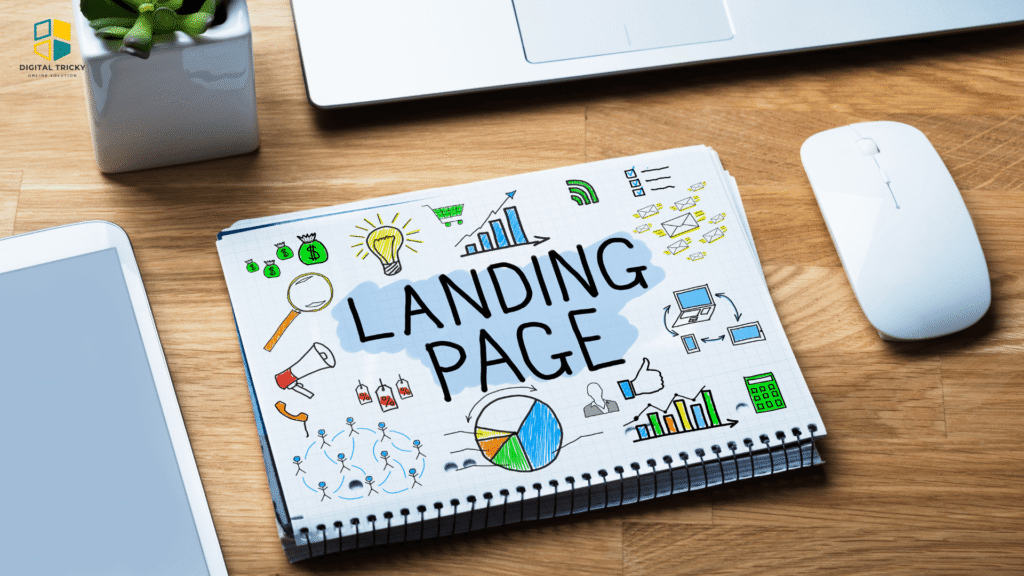
- E-book download
- Webinar registration
- Booking an appointment
- Buying a product
- Booking a free demo
There are only two outcomes:
- Visitors become leads or customers
- Visitors leave the page
That’s it—no middle ground.
What is the Difference Between a Website and a Landing Page?
Most people don’t clearly understand the difference between a website and a landing page.
Website
A website is like a digital brochure.
- Multiple pages
- Multiple links
- Multiple objectives
Landing Page
A landing page is distraction-free.
- No unnecessary links
- No navigation menu
- One clear objective
The entire page is focused on getting users to take one specific action.
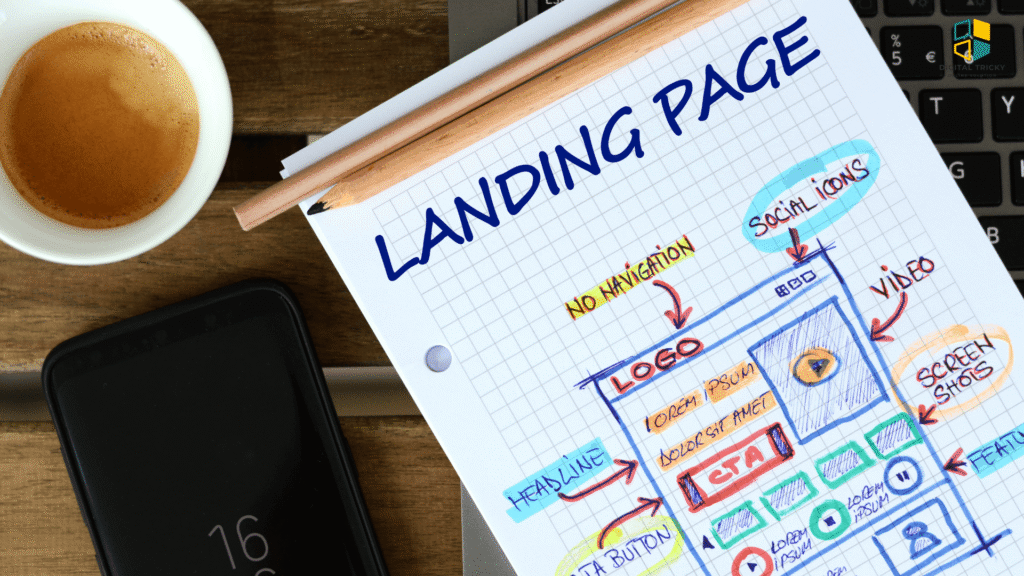
Landing Page vs Website (Comparison Table)
Landing Page
- Single-focused objective
- No navigation options
- Designed for a specific campaign
- Clear Call to Action (CTA)
- Tailored for a specific audience
- Optimized for conversions
Website
- Multiple objectives or purposes
- Extensive navigation options
- Part of the overall website structure
- Various CTAs or no specific CTA
- Targeted toward a broader audience
- Focused on information and engagement
What are the different types of Landing Pages?
Understanding different types of landing pages helps you choose the right structure for your goal.
Lead Generation Landing Pages (Opt-in / Squeeze Pages)
These pages are designed to capture contact information from visitors.
Usually, something valuable is offered in exchange, such as:
- E-books
- Whitepapers
- Newsletters
- Product or service enquiries
E-book or Whitepaper Landing Pages
These pages offer downloadable resources like e-books, whitepapers, or reports in exchange for user details.
Webinar Registration Pages
Used to promote webinars and collect registrations by highlighting the benefits of attending.
Newsletter Signup Pages
Designed to collect emails for regular updates.
Subscribers receive ongoing value, helping you nurture and build trust with your audience.
Contest or Giveaway Pages
These pages offer prizes in exchange for participation or contact details, creating excitement and engagement.
Free Trial or Demo Pages
Common in SaaS industries, these pages offer free trials or demos in exchange for user information.
Assessment or Quiz Pages
Interactive pages that provide personalized insights while collecting user data for lead nurturing.
Application Pages
Used for job applications, scholarship programs, event registrations, or any selection-based process.
Product or Service Enquiry Pages
These pages help visitors who are interested but still have questions.
The goal is to connect potential customers with the sales team for more personalized communication.
What Is a Sales Page?
Sales pages are designed to sell products or services directly.
They provide detailed information, highlight benefits, and use persuasive elements to encourage conversions.
Product Pages
Dedicated pages that showcase a product’s features, benefits, testimonials, and pricing.
Service Pages
Similar to product pages but focused on services, outlining benefits and pricing details.
Upsell or Cross-sell Pages
These pages increase the value of a purchase by offering upgrades or related products during checkout.
Limited-Time Offer Pages
Designed to create urgency by promoting special discounts or time-sensitive offers.
Pre-Order Pages
Used for upcoming product launches to build anticipation and secure early sales.
Membership or Subscription Pages
Focused on attracting subscribers with ongoing services, often featuring tiered pricing and benefits.

Why Is a Thank You Page Important?
After visitors complete an action—such as submitting a form or making a purchase—they are redirected to a Thank You page.
This page:
- Confirms the action
- Builds trust
- Provides next steps or instructions
- Can suggest additional offers or content
A Thank You page completes the user journey and improves the overall experience.

Conclusion
A landing page is not just another webpage—it’s a conversion tool.
Unlike a website that informs and educates, a landing page is designed to drive action.
One page.
One message.
One goal.
Whether you want more leads, more sales, or more sign-ups, a well-designed landing page can make a huge difference—especially when you’re running ads or campaigns.
If you focus on clarity, remove distractions, and guide users toward one clear action, your landing page can become one of the most powerful assets for growing your business or personal brand.
And now that you understand the basics, the next step is simple:
Create a landing page with a clear goal—and let it work for you.
If you want to follow me on Instagram clickhere.